

21 January, 2026
Introduction
Industries need an LPG Gas Vaporizer when natural vaporization from cylinders or bulk tanks is no longer able to supply gas at a steady pressure for continuous or high-demand operations. Relying solely on ambient heat can lead to pressure drops, flame instability, and operational disruptions.
At SEPL (Saraswat Engineers Pvt. Ltd.), industrial LPG vaporizer solutions are engineered to support high-load, safety-critical applications. These solutions ensure reliable gas pressure, stable flame output, and enhanced operational safety.
Learn more about SEPL’s industrial LPG gas vaporizers for high-demand applications.
In most industrial environments, LPG is a backbone fuel for heating, processing, and production. However, natural vaporization alone becomes insufficient as consumption rises. This is precisely where an industrial LPG gas vaporizer becomes a necessity rather than an option.
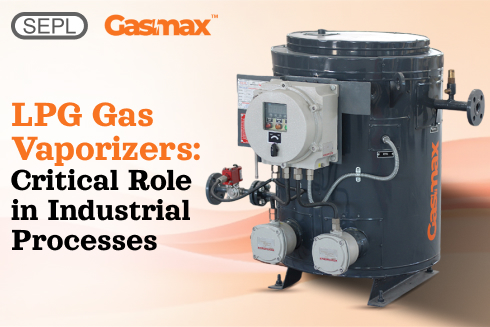
An LPG gas vaporizer converts liquid LPG into gas at a controlled and consistent rate, independent of ambient temperature. Unlike natural vaporization, it ensures reliable gas flow even during peak demand or extended operating hours.
Industries require LPG vaporizers when gas demand exceeds what cylinders or bulk tanks can naturally deliver—especially during cold weather, continuous shifts, or high-capacity burner usage. Without a vaporizer, pressure drops, incomplete combustion, and shutdowns can occur.
Why Does Natural LPG Vaporization Fail in Industrial Settings?
Natural vaporization depends on surrounding heat. In industrial operations, this method often proves inadequate due to:
Continuous high gas consumption
Simultaneous operation of multiple burners
Pressure fluctuations during peak loads
Frosting or icing of LPG cylinders and tanks
An industrial LPG gas vaporizer actively heats LPG in a regulated manner, ensuring consistent pressure and smooth plant operations.
An LPG gas vaporizer uses an external heat source—such as electricity, hot water, steam, or controlled ambient energy—to convert liquid LPG into vapor before supplying it to the gas pipeline.
Maintaining constant gas pressure
Preventing cylinder icing and pressure loss
Ensuring uniform burner performance
Reducing downtime and safety risks
This makes LPG vaporizers ideal for industrial applications where reliability is non-negotiable.
For example, Water Bath Type LPG Vaporizers are commonly used in heavy-duty industrial environments for stable output and long operational life.
Not all industries require an LPG vaporizer. However, industries with high, continuous, or fluctuating gas demand benefit significantly from vaporizer-based systems.
Small-scale or intermittent users may manage with natural vaporization. But once gas usage becomes critical to production quality, safety, or uptime, installing an LPG vaporizer becomes essential.
LPG Vaporizer Applications Across Industries
Industrial LPG gas vaporizer applications span across multiple sectors, including:
Used for furnaces, ovens, and heat-treatment processes requiring stable flame output.
Supports round-the-clock cooking without pressure fluctuations.
Ensures controlled heating for sensitive processes.
Used in baking, frying, drying, and roasting applications.
Essential for dryers, kilns, and curing processes.
In each of these cases, an LPG vaporizer for high gas demand ensures uninterrupted production and consistent quality.
Industries should seriously consider installing an LPG vaporizer when:
Gas is consumed continuously for long hours
Multiple high-capacity burners operate together
Bulk LPG storage systems are used
Pressure drops affect product quality or safety
Without a vaporizer, systems are more likely to experience flame failure, incomplete combustion, and emergency shutdowns.
Selecting the correct LPG gas vaporizer is as important as installing one. Key factors to consider include:
Maximum and peak gas consumption
Number and type of burners
Daily operating hours
Future expansion plans
Safety and regulatory compliance
Compact systems like the SEPL Gasmax 50 Mini are suitable for moderate industrial loads, while larger facilities may require high-capacity vaporizers engineered for continuous duty.
Also Checkout:
Proper installation of industrial LPG gas vaporizers is critical. Poorly designed systems can lead to inefficiency, overheating, or safety hazards.
Professional installation typically includes:
Gas load and demand assessment
Correct vaporizer capacity selection
Integration of pressure regulators and safety valves
Compliance with safety standards
Pre-commissioning testing
This structured approach ensures long-term reliability and scalability.
What Makes LPG Vaporizers Safer Than Natural Vaporization?
Many industries shift to vaporizers primarily for safety reasons. Compared to natural systems, LPG vaporizers offer:
Regulated temperature and pressure control
Reduced risk of LPG freezing
Improved combustion efficiency
Lower stress on cylinders and pipelines
When designed and installed correctly, vaporizers significantly reduce operational risks.
Why SEPL Is a Preferred Partner for LPG Vaporizer Solutions
SEPL is trusted across industries for delivering engineered industrial LPG vaporizer solutions tailored to real-world operating conditions. From vaporizer selection and system design to compliant installation and commissioning, SEPL focuses on safety, performance, and future scalability.
FAQs:-
1. In which industries are LPG gas vaporizers commonly required?
Manufacturing, food processing, hospitality, pharmaceuticals, and textile industries frequently require vaporizers due to continuous high gas demand.
2. Can LPG vaporizers work with bulk LPG tanks?
Yes, vaporizers are commonly integrated with bulk storage systems to maintain constant pressure and gas flow.
3. Does an LPG vaporizer reduce gas consumption?
While it does not reduce usage directly, it improves efficiency through stable pressure and complete combustion.
4. Are LPG vaporizers legally mandatory?
Not universally, but they are strongly recommended for high-load industrial systems to meet safety standards.
5. How is the right LPG vaporizer capacity determined?
Capacity depends on peak gas demand, number of burners, operating hours, and future expansion—best assessed by technical experts.
Final Thoughts:-
In industrial environments, instability in gas supply is unaffordable. As demand increases, natural vaporization becomes inefficient and unsafe. An LPG Gas Vaporizer ensures stable pressure, consistent performance, and safer operations.
Talk to SEPL experts to select the right LPG gas vaporizer for your industrial load and ensure long-term operational confidence.
Comments for

