


The SEPL Push to Test Valve ( Pressure Gauge Valve) is referred to as a shut-off element in the middle of a line of measurement and pressure gauge. Commonly, the Push To Test Valve is closed. In such conditions, there is no pressure on pressure Gauge when we push the spindle pressure will be relevant to the pressure gauge and show up as the operating Pressure. If we remove the force from the spindle the Valve is automatically stable in a normal close state and relieves pressure from the Pressure Gauge side. If you select the valve, you are confident to extend the life of the expensive Pressure Gauges and suitable accuracy for it.
A Push to Test Valve is designed to protect pressure gauges from excessive pressure and unnecessary tension on the bourdon tube and diaphragm in the gas pipeline. The Push to Test Valve is a stopper between the measuring line and the pressure gauge.The frequently of Pressure Gauges is Major Problem of Industry where Gas Burners & Combustion equipment’s are used. To eliminate this problem, SEPL has developed an indigenous Push to Test Valve.
These Valves are used primarily in Gas Trains Specially in Second Stage, & Third Stage. Where Low Pressure Gauges are being Used. The Third Stage as well as Second Stage Gas Trains Having Low Pressure Gauge i.e. Mili bar (MBAR) or Water column Gauge which are so sensitive to Jerk Pressure as well. We use Push to Test Valve/ Pressure Gauge Valve to protect Pressure Gauges from Jerk as well as from High pressure situation which may be used in conditions of failure of pressure reducing Valves or Regulators.
Application: Gases LPG/ PNG
Min Working Temperature -20 C
Maximum Working Temperature- 65 C
Pressure Rating - 5 bar
End Type - Threaded
Connection - 1/4", 3/8", 1/2 inch BSP
Usage/Application - Between Pressure Gauge & Gas Line
Country of Origin - Made in India
1. The primary benefit of a pressure gauge valve is its ability to provide real-time pressure monitoring.
2. Integrating the pressure gauge into the valve body eliminates the need for separate gauge connections, reducing the overall space requirements.
3. Pressure gauge valves enhance safety by providing a visual indication of pressure levels. Operators can quickly identify if pressure exceeds safe operating limits, avoiding potential accidents or equipment failures.
4. Pressure gauge valves are available in various sizes, pressure ratings, and materials, allowing them to be compatible with a wide range of applications and media
Q: What is a Gas pressure gauge valve?
Ans: Push to Test Valve ( Pressure Gauge Valve) are a Shut-off valve between measuring pipeline and pressure gauge. Normally the Push To Test Valve is closed.
Q:What Is the need of this valve?
Ans: There are the need of this valve to protect Pressure gauges from Jerk pressure, save falure of pressure gauge from contineous stress on Bourden tube, this valve increase the life span of pressure gauge.The PBV protects the gauge from pressure surges, and it is used as a means to verify gauge still properly works..
Q: How does a pressure gauge valve work?
Ans: Gas push to test valves ( Pressure Gauge Valve) typically feature a push-button mechanism that, When we manually push the spindle, the pressure on the gauge can be read. Once released, the PBV automatically closes, and the pressure on the gauge is automatically removed. by this act of valve pressure gauge is free from stress always.
Q: Where are pressure gauge valves used?
We use this valve in Gas Trains before Pressure Gauge. its highly recomonded in second stage & third stage gas train. because Low Pressure gauges are more sensitive for pressure fluctuations ie the do not have rasistant to bear jerks.
Q: Are pressure gauge valves suitable for high-pressure applications?
Ans: Yes, pressure gauge valves are available in different pressure ratings to accommodate a wide range of applications, including high-pressure systems. It is important to select a pressure gauge valve with a rating that matches or exceeds the maximum pressure expected in the system to ensure safe and reliable operation.
Q: Can pressure gauge valves be used for both liquid and gas applications?
Ans: No, SEPL pressure gauge valve exclusively used for gas applications. The Max W,p Is Up to 7 Bar.
Q: What types of pressure gauges are commonly integrated into pressure gauge valves?
Ans: The most common type of pressure gauge integrated into pressure gauge valves is the Bourdon tube gauge. However, depending on the application, other types such as diaphragm gauges or digital gauges may also be used.
Q: Can pressure gauge valves be installed in any orientation?
Ans: Pressure gauge valves are designed to be installed in specific orientations for optimal performance. The manufacturer's guidelines should be followed to ensure proper installation and accurate pressure readings.
Q: How do I select the right pressure gauge valve for my application?
Ans: When selecting a pressure gauge valve, factors to consider include the desired pressure range, media compatibility, temperature range, size, and specific requirements of your application. Consulting with the manufacturer or a knowledgeable supplier can help ensure the right selection.
Q: Are pressure gauge valves suitable for hazardous environments?
Pressure gauge valves can be designed and certified for use in hazardous environments, such as those with explosive atmospheres. These specialized valves adhere to specific safety standards and may incorporate features like explosion-proof enclosures or intrinsically safe designs.
 Latest SEPL LPG & Gas Industry Updates
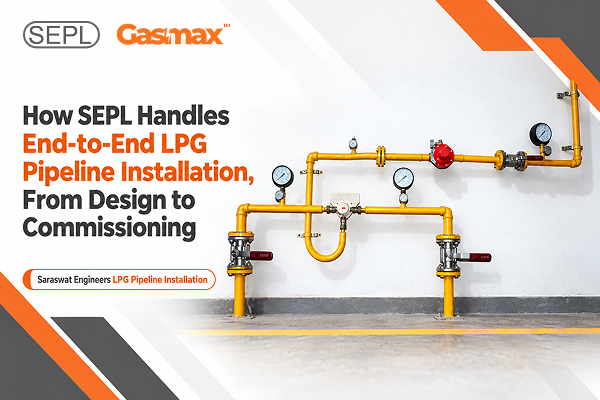
How SEPL Handles End-to-End LPG Pipeline Installation, From Design to Commissioning
LPG Pipeline Installation needs proper planning from the start. Saraswat Engineers Pvt. Ltd. (SEPL) handles industrial LPG pipeline systems through st...
17 September, 2026
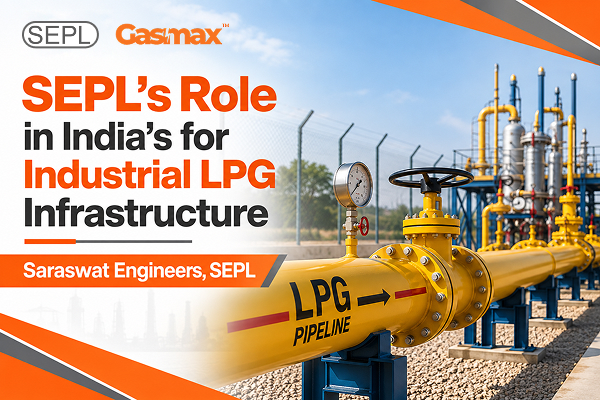
SEPL Role in India's Industrial LPG Infrastructure
Industrial LPG infrastructure needs more than a single piece of equipment. It can include LPG vaporizers, pipeline systems, manifolds, valves, regulat...
17 September, 2026
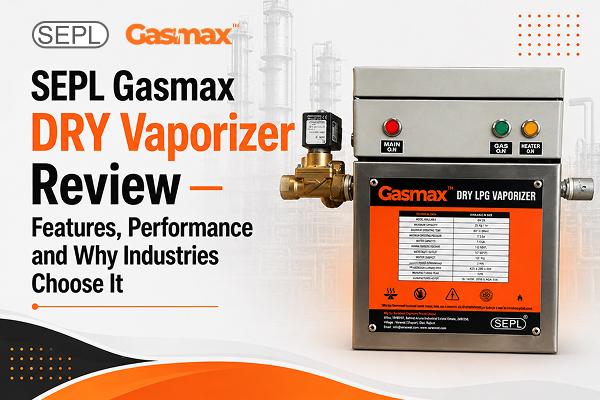
SEPL Gasmax DRY Vaporizer Review — Features, Performance and Why Industries Choose It
The SEPL Gasmax DRY Vaporizer is a dry-type system designed to convert liquid LPG into gas without using a water bath. Saraswat Engineers Pvt. Ltd. (S...
03 September, 2026
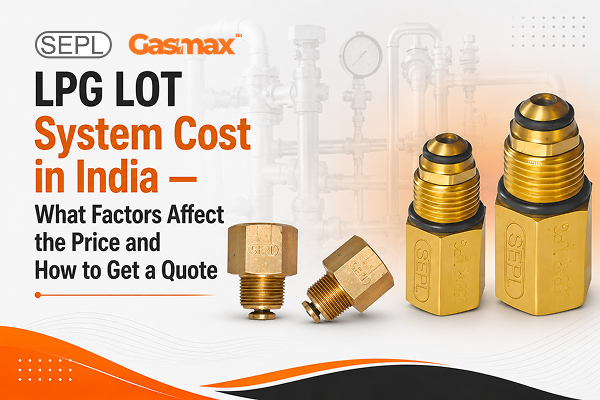
LPG LOT System Cost in India — What Factors Affect the Price and How to Get a Quote
The LPG LOT system cost in India depends on the system design, number of cylinders, manifold accessories, LPG requirements, and project needs. Saraswa...
03 September, 2026
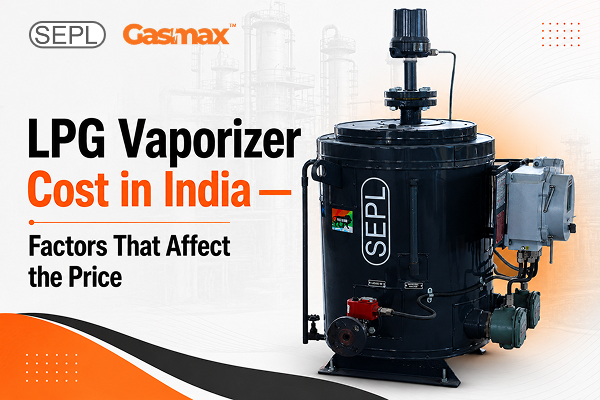
LPG Vaporizer Cost in India — Factors That Affect the Price
The cost of LPG vaporizers in India depends on the vaporizer type, capacity, specifications, safety features, and project requirements. Saraswat Engin...
31 August, 2026
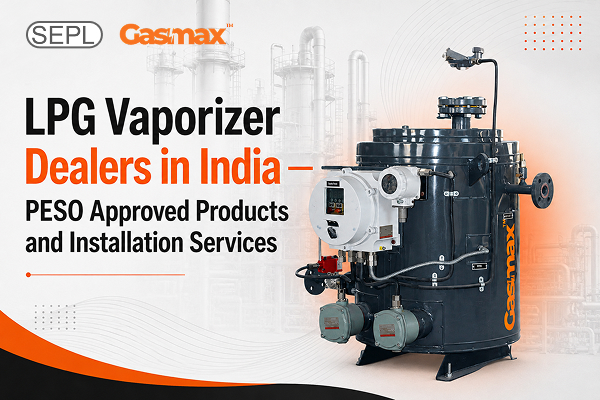
LPG Vaporizer Dealer in India — PESO Approved Products and Installation Services
Choosing the right LPG Vaporizers Dealers matters when an industrial plant needs a steady LPG gas supply. The dealer should provide suitable equipment...
31 August, 2026
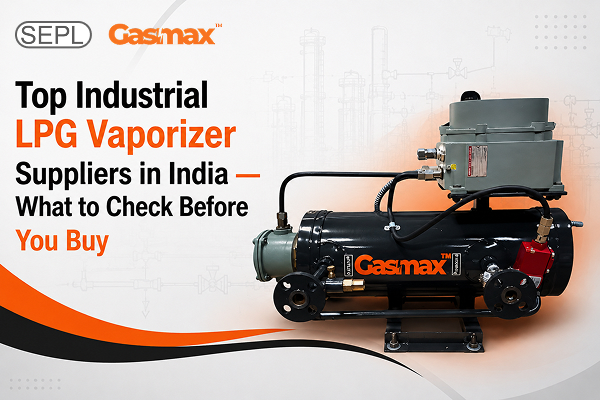
Top Industrial LPG Vaporizer Suppliers in India — What to Check Before You Buy
When a plant requires a constant supply of gas, the selection of the appropriate supplier of an Industrial LPG Vaporizer is important. The supplier mu...
17 August, 2026
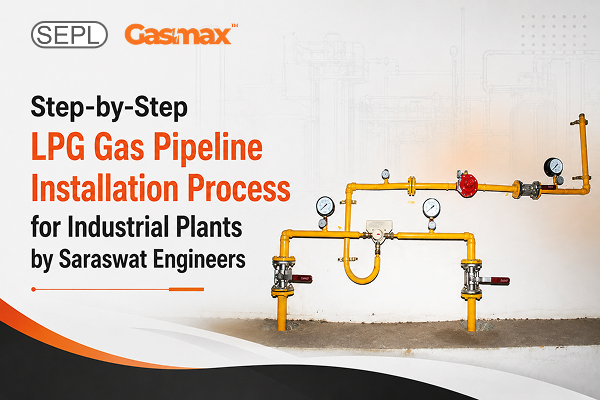
Step-by-Step LPG Gas Pipeline Installation Process for Industrial Plants by Saraswat Engineers
A proper LPG gas pipeline installation helps industrial plants maintain a safe and steady gas supply. Saraswat Engineers Pvt. Ltd. (SEPL) designs LPG ...
17 August, 2026
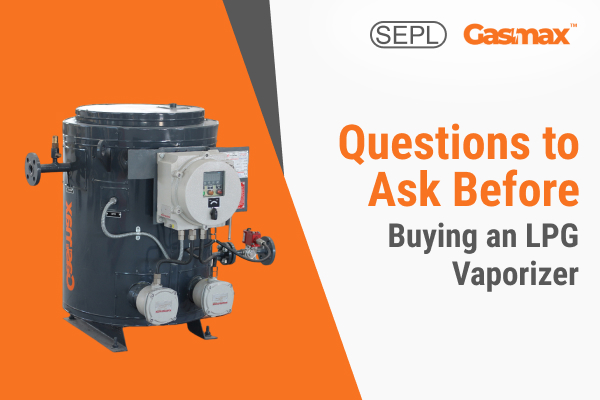
Questions to Ask Before Buying an LPG Vaporizer
Choosing the right LPG Vaporizers is important for industries that need a safe and continuous LPG supply. Before buying a vaporizer, it is helpful to ...
28 July, 2026
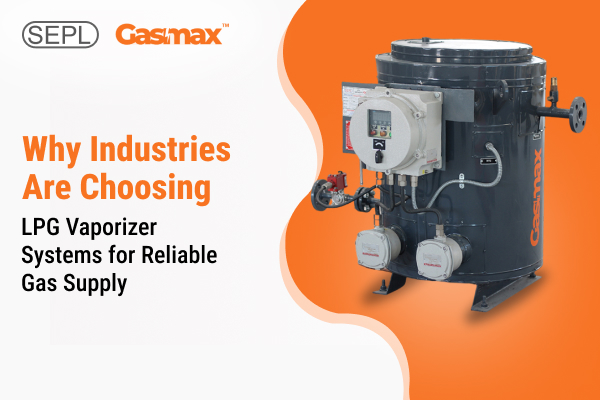
Why Industries Are Choosing LPG Vaporizer Systems for Reliable Gas Supply
Many industries are switching to LPG Vaporizers because they need a safe and steady LPG supply for daily operations. At Saraswat Engineers Pvt. Ltd. (...
28 July, 2026


 Read More