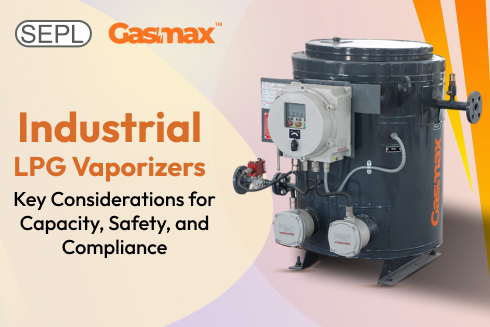
Industries using LPG rely on more than just the supply of gas; they depend on controlled, safe and continuous vaporization. This is accomplished by the Industrial LPG Vaporizer, which can provide liquid LPG into gas at a constant pressure. Industrial vaporizer maintains stable gas flow, prevents pressure drop and ensures safe LPG application in large-scale gas-based appliances.
The need for LPG is great and consistent in factories, hotels, hospitals, commercial kitchens and manufacturing plants. Operations may be shut down, exposed to safety risks, or face regulatory scrutiny if they do not have adequate vaporization and safety configuration. This is why the appropriate system design, safety fittings, and certified installation materials are important every step of the way.
What Is an Industrial LPG Vaporizer?
An industrial LPG vaporizer refers to a piece of equipment that is used to steam liquid LPG into a gaseous state with controlled heat input. Natural vaporization by cylinders or tanks would not be adequate in large installations. Vaporizers can be used to maintain LPG in a gaseous state at a desirable pressure, even in the case of load variation or ambient temperature.
The industrial installations, in contrast to small business systems, require exact control, increased capacity, and adherence to safety standards.
Why Capacity Selection Matters in LPG Vaporization
Selection of the appropriate vaporizer capacity is a very important factor in the performance and safety of the system. The determinants of capacity are:
- The daily and peak LPG consumption.
- Connected number of burners or machines.
- The ambient temperature conditions.
- Load fluctuations and operating hours.
- Plans to increase demand in the future.
A small vaporizer may result in pressure drops and burner malfunction, whereas a large system will be expensive but not valuable. The selection of capacity is done properly to facilitate smooth operation and efficiency in the long run.
How LPG Vaporization Works in Industrial Systems
The process of vaporization is low but very regulated. The storage tanks supply liquid LPG to the vaporizer, where it is heated using electric, water bath or steam. This heat is used to convert LPG to gas, which moves through pressure control devices and safety devices before being used in end-use equipment.
Properly designed LPG Vaporizers are capable of having consistent pressure, do not ice up, and give stable combustion to all the appliances connected.
Safety Factors Industries Must Never Ignore
LPG is effective and also very flammable. Safety cannot be optional. The critical safety requirements are:
- Pressure regulators and relief valves.
- Excess Flow Valves(EFV) to prevent gas in the event of leakages.
- Emergency isolation auto shut-off valves.
- Ethylene gaskets to stop retrograde flow.
- Hose, pigtails and pipeline fittings are certified.
These components safeguard both equipment, people and infrastructure against fire dangers, pressure failures, and gas leakages.
Compliance Requirements for Industrial LPG Installation
The LPG systems used in industries should be able to comply with strict regulations.
Compliance ensures:
- PESO and safety legal operation.
- Reduced accident risk
- Insurance and audit certification.
- Long-term working stability.
Every Industrial LPG Vaporizer is supposed to be pressure tested, leakage identified, audited on safety arrangements and the documentation. To satisfy such needs, certified products and professional installation are needed.
How SEPL Ensures Safe & Certified LPG Installations
SEPL has gained the reputation of a partner that industries that depend on LPG can rely on. They offer end-to-end solutions of LPG- from the design of a system to installation and certification of safety. They are structured in such a manner that they include:
- Proper choice of vaporizer capacity and safety fittings.
- The layout of the LPG pipeline designs.
- Conducting pressure and leak testing.
- Adopting flame and leak prevention measures.
- Doing compliance audits and offering documentation of compliance.
This technique reduces operational risk and enhances performance and safety to the maximum.
Consult SEPL experts:
https://www.seplglobe.com/contact-us
Essential LPG Safety Components for Every Industrial Setup
1. Valves and Pressure Regulators.
Regulate the steady gas pressure and prevent over-pressure cases in the system.
2. Excess Flow Valves (EFV)
Automatic termination of the flow of the gas in case of pipeline bursting or unexpected leakage.
3. Auto Shut-Off Valves and Non-Return Valves
Stop backflow and isolate gas immediately in case of an emergency.
4. Heavy-Duty Hoses, Pigtails and Adaptors
Intended to survive in tough industries and constant applications.
5. LPG Manifold Systems
Make sure that there is a continuous supply of gas and that there is even distribution in the big installations.
Why SEPL Is a Trusted LPG Safety Partner
- Sturdy and quality industrial components.
- Minimized risks in operations by certified safety standards.
- All-inclusive installation coverage by trained engineers.
- Solutions to every industry, from hotels to heavy industry.
Request a consultation:
https://www.seplglobe.com/contact-us/
Conclusion: Ensure Safe & Compliant LPG Operations
The LPG systems in industries require accuracy, safety and conformity of all the stages. Whether it is the appropriate selection of capacity, certified installation and safety fittings, every choice will affect performance and risk. When selecting a properly designed Industrial LPG Vaporizer System, one can avoid fluctuations in gas supply, ensure a decrease in downtime, and ensure compliance with regulatory requirements. SEPL can assist the industries in developing efficient and compliant and reliable LPG systems with expert engineering services, certified components, and full-fledged safety solutions that would be in operation over the long term.
Take a look at this blog post - The Significance of Industrial LPG Vaporizers